
Thoughts of school are often far away during the summer, but the time to buy supplies and send your child back to school is just around the corner. With school-aged children at home, it’s the perfect time to be on the lookout for signs of poor vision. Delays in development or difficulty in school can sometimes be the result of undetected vision problems. Learning more about children’s vision can help you quickly deal with any issues that come up so that your child doesn’t suffer from undetected vision problems.
Difference Between an Eye Exam and a Vision Screening
Most schools perform vision screenings. These screenings are helpful in revealing vision problems but are a limited process. They can’t diagnose eye or vision problems, instead they may indicate the need for a full eye exam. Children who have vision problems may be able to pass one of these screenings. Vision screenings also don’t test everything; they often evaluate just one or two areas of vision. Although they are a great initial step, vision screenings should not take the place of eye exams or be relied on fully to uncover vision problems.
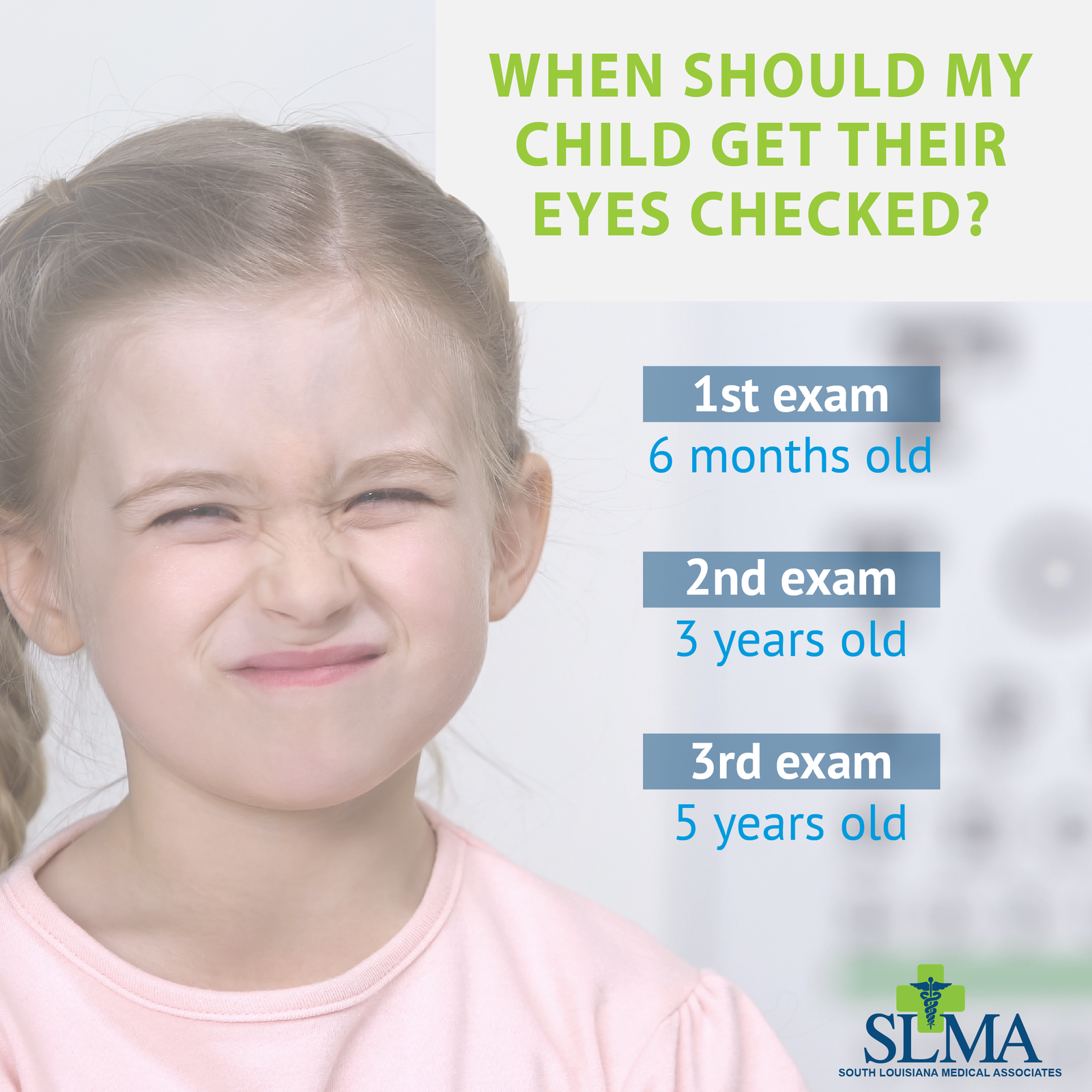
An eye exam is performed by a doctor of optometry. This thorough exam makes sure the child’s vision is developing properly and that there isn’t evidence of eye disease. If any issues are discovered, the optometrist can prescribe treatment to correct the problem. This may include eyeglasses or vision therapy. Children should have their first eye exam between the ages of three and five. You can help your child prepare for their first eye exam in the following ways:
- Schedule the appointment for early in the day, and allow an hour for the exam.
- Talk about what to expect before the exam and encourage your child to ask questions.
- Describe the exam in a way your child can understand. For example, you could compare the instruments to a kaleidoscope and tiny flashlights.
The next eye exam is usually recommended around age six, followed by yearly exams.
Signs It’s Time for an Eye Exam
Children often don’t complain about vision problems, so it can be hard for parents to know their children are having difficulty seeing. Be on the lookout for signs of poor vision, and take your child to an optometrist or a pediatric eye doctor for an eye exam if you notice they seem to be having a hard time. Here are some signs to watch for:
- Squinting – If your child wrinkles their face or eyes when trying to look at something, it often indicates difficulty seeing. Children may squint to try to see more clearly or in reaction to a bright light. Squinting can temporarily improve vision by changing the shape of the eye. It’s a classic symptom of both nearsightedness and farsightedness.
- Tilting the head – A variety of eye problems can be somewhat compensated for by tilting the head. It can be a sign of eye muscle imbalance or strabismus, commonly called lazy eye. If the upper eyelid droops to partially block the line of vision, a condition called ptosis, tilting the head can help the child see past the eyelid. Tilting the head can also help minimize double vision.
- Sitting too close to the TV – If you notice your child sitting unusually close to the TV or holding books or tablets right next to their face, it may be because they are nearsighted. Children who are nearsighted can usually see things clearly when they are close up, but have a hard time seeing things at a distance.
- Losing their place – Having your child read aloud is a great way to watch for vision problems. If they have a hard time keeping their place or often skip lines, it might a sign of astigmatism or an eye muscle problem.
- Continuing to use their finger to keep their place after learning to read independently can also be a sign of vision problems.
- Covering one eye – Covering or closing one eye while reading or watching TV allows a child to shut out the eye with poorer vision. This makes it easier to see because the weaker eye is not interfering with their vision.
- Rubbing eyes – Allergies or being tired often cause children to rub their eyes. However, this may also indicate eye fatigue and a number of vision problems.
- Frequent headaches – Children with uncorrected farsightedness may often experience brow aches or frontal headaches. This is because they are using extra effort to try to clear their vision.
Ways to Encourage Vision Development
As a parent, there are things you can do at home to help your child’s vision develop. This is particularly helpful with preschool age children. Here are some ways to help your preschooler develop visual skills:
- Play catch with a ball or bean bag
- Read aloud and let your child see the words
- Provide finger paints and a chalkboard
- Encourage hand-eye coordination at play with building blocks and puzzles
- Play simple memory games
- Provide supplies for coloring, cutting and pasting
- Encourage outdoor play including tricycle or bike riding, swinging, ball games and rolling activities
- Make time for interaction with other children
Communicating with Teachers
Once your child goes back to school, their teacher may notice problems with vision. Ask the teacher if they have noticed anything that might indicate difficulty seeing, such as struggling to see the blackboard clearly or having a hard time focusing on work on a desk. These experiences can quickly cause a child to become frustrated and can hinder learning.
Taking time to watch for signs of vision problems, encouraging vision development and getting regular eye exams helps to make sure your child can see clearly.