South Louisiana Medical Associates
Call

Behavioral Health & Lungs

Pneumonia and Lung Nodules in Houma & South Louisiana

Learn the symptoms, causes, testing and treatment options for pneumonia and lung nodules, and find SLMA providers in Houma, Thibodaux and South Louisiana who can help.

Pneumonia

What is pneumonia?

Pneumonia is an infection in one or both of the lungs. It causes the air sacs of the lungs to fill up with fluid or pus. It can range from mild to severe, depending on the type of germ causing the infection, your age, and your overall health.

What causes pneumonia?

Bacterial, viral, and fungal infections can cause pneumonia.

Bacteria are the most common cause. Bacterial pneumonia can occur on its own. It can also develop after you've had certain viral infections such as a cold or the flu. Several different types of bacteria can cause pneumonia, including:

Viruses that infect the respiratory tract may cause pneumonia. Viral pneumonia is often mild and goes away on its own within a few weeks. But sometimes it is serious enough that you need to get treatment in a hospital. If you have viral pneumonia, you are at risk of also getting bacterial pneumonia. The different viruses that can cause pneumonia include:

Fungal pneumonia is more common in people who have chronic health problems or weakened immune systems. Some of the types include:

Who is at risk for pneumonia?

Anyone can get pneumonia, but certain factors can increase your risk:

  • Age; the risk is higher for children who are age 2 and under and adults age 65 and older
  • Exposure to certain chemicals, pollutants, or toxic fumes
  • Lifestyle habits, such as smoking, heavy alcohol use, and malnourishment
  • Being in a hospital, especially if you are in the ICU. Being sedated and/or on a ventilator raises the risk even more.
  • Having a lung disease
  • Having a weakened immune system
  • Have trouble coughing or swallowing, from a stroke or other condition
  • Recently being sick with a cold or the flu

What are the symptoms of pneumonia?

The symptoms of pneumonia can range from mild to severe and include:

The symptoms can vary for different groups. Newborns and infants may not show any signs of the infection. Others may vomit and have a fever and cough. They might seem sick, with no energy, or be restless.

Older adults and people who have serious illnesses or weak immune systems may have fewer and milder symptoms. They may even have a lower than normal temperature. Older adults who have pneumonia sometimes have sudden changes in mental awareness.

What other problems can pneumonia cause?

Sometimes pneumonia can cause serious complications such as:

  • Bacteremia, which happens when the bacteria move into the bloodstream. It is serious and can lead to septic shock.
  • Lung abscesses, which are collections of pus in cavities of the lungs
  • Pleural disorders, which are conditions that affect the pleura. The pleura is the tissue that covers the outside of the lungs and lines the inside of your chest cavity.
  • Kidney failure
  • Respiratory failure

How is pneumonia diagnosed?

Sometimes pneumonia can be hard to diagnose. This is because it can cause some of the same symptoms as a cold or the flu. It may take time for you to realize that you have a more serious condition.

Your health care provider may use many tools to make a diagnosis:

  • A medical history, which includes asking about your symptoms
  • A physical exam, including listening to your lungs with a stethoscope
  • Various tests, such as
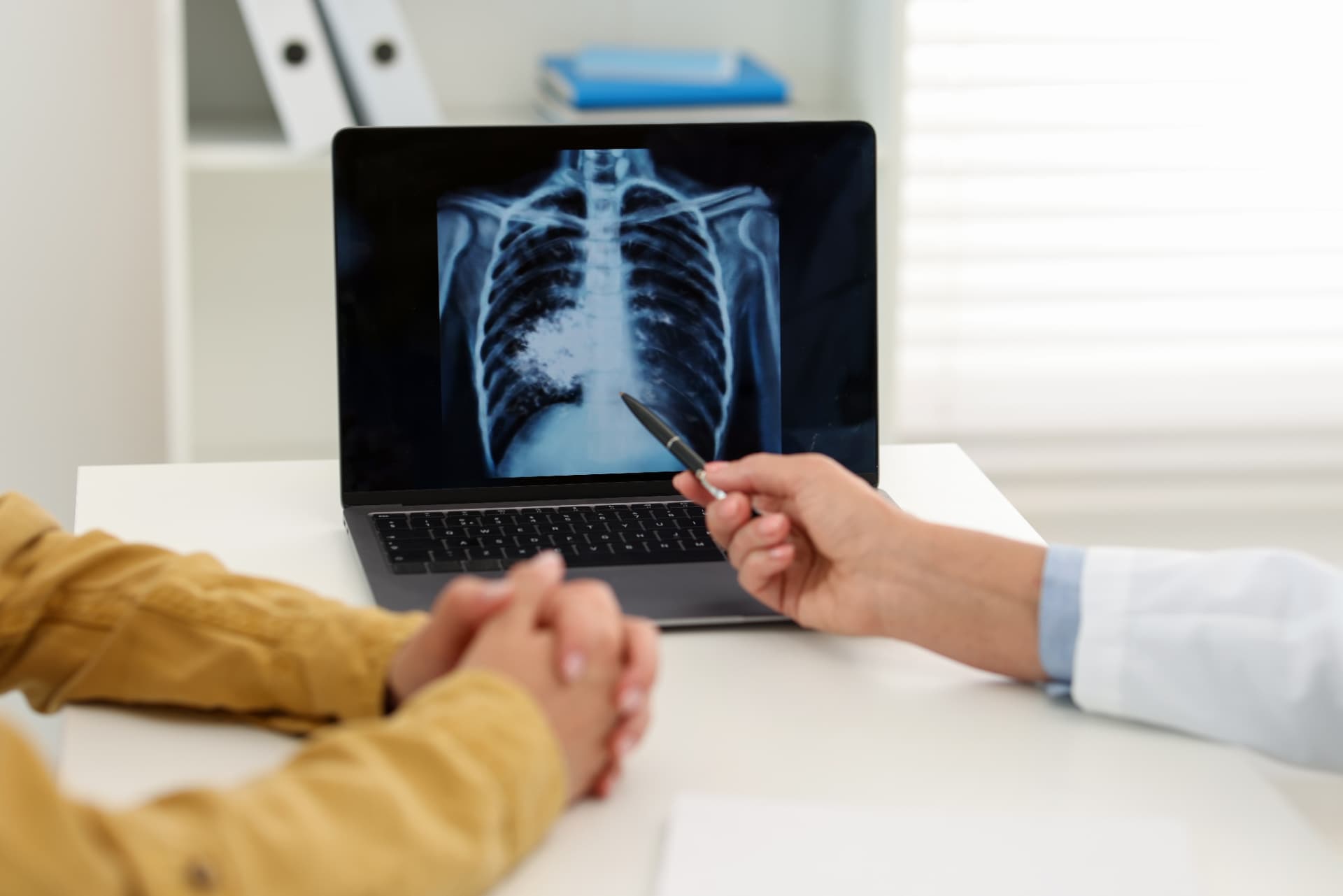
    • A chest x-ray
    • Blood tests such as a complete blood count (CBC) to see if your immune system is actively fighting an infection
    • A Blood culture to find out whether you have a bacterial infection that has spread to your bloodstream

If you are in the hospital, have serious symptoms, are older, or have other health problems, you may also have more tests, such as:

  • Sputum test, which checks for bacteria in a sample of your sputum (spit) or phlegm (slimy substance from deep in your lungs).
  • Chest CT scan to see how much of your lungs is affected. It may also show if you have complications such as lung abscesses or pleural effusions.
  • Pleural fluid culture, which checks for bacteria in a fluid sample that was taken from the pleural space
  • Pulse oximetry or blood oxygen level test, to check how much oxygen is in your blood
  • Bronchoscopy, a procedure used to look inside your lungs' airways

What are the treatments for pneumonia?

Treatment for pneumonia depends on the type of pneumonia, which germ is causing it, and how severe it is:

  • Antibiotics treat bacterial pneumonia and some types of fungal pneumonia. They do not work for viral pneumonia.
  • In some cases, your provider may prescribe antiviral medicines for viral pneumonia
  • Antifungal medicines treat other types of fungal pneumonia

You may need to be treated in a hospital if your symptoms are severe or if you are at risk for complications. While there, you may get additional treatments. For example, if your blood oxygen level is low, you may receive oxygen therapy.

It may take time to recover from pneumonia. Some people feel better within a week. For other people, it can take a month or more.

Can pneumonia be prevented?

Vaccines can help prevent pneumonia caused by pneumococcal bacteria or the flu virus. Having good hygiene, not smoking, and having a healthy lifestyle may also help prevent pneumonia.

Source: MedlinePlus: Pneumonia (original source: NIH: National Heart, Lung, and Blood Institute)

Lung Cancer

What is lung cancer?

Lung cancer is cancer that forms in tissues of the lung, usually in the cells that line the air passages. It is the leading cause of cancer death in both men and women.

There are two main types: small cell lung cancer and non-small cell lung cancer. These two types grow differently and are treated differently. Non-small cell lung cancer is the more common type.

Who is more likely to develop lung cancer?

Anyone can develop lung cancer, but certain factors raise your risk of getting it:

  • Smoking. This is the most important risk factor for lung cancer. Tobacco smoking causes about 9 out of 10 cases of lung cancer in men and about 8 out of 10 cases of lung cancer in women. The more years you smoke and the more cigarettes you smoke each day, the more your risk goes up. Your risk is also greater if you smoke a lot and drink alcohol every day or take beta carotene supplements. If you have quit smoking, your risk will be lower than if you had kept smoking. But you will still have a higher risk than people who never smoked.
  • Secondhand smoke, which is the combination of the smoke that comes from a cigarette and the smoke breathed out by a smoker. When you breathe in secondhand smoke, you are exposed to the same cancer-causing agents as smokers, although in smaller amounts.
  • A family history of lung cancer.
  • Being exposed to asbestos, arsenic, chromium, beryllium, nickel, soot, or tar in the workplace.
  • Being exposed to radiation, for example from:
  • HIV infection. Your risk is higher if you have HIV. However, smoking rates are higher in people who have HIV, so it's not clear whether the increased risk is from the HIV infection or from smoking.
  • Air pollution. Studies show that living in areas with higher levels of air pollution increases your risk of lung cancer.

What are the symptoms of lung cancer?

Lung cancer may not cause any signs or symptoms until the cancer is advanced. Sometimes the cancer is found during a chest x-ray done for another condition.

The symptoms of lung cancer may include:

How is lung cancer diagnosed?

To find out if you have lung cancer, your health care provider:

  • Will take your medical history, which includes asking about your symptoms
  • Will ask about your family history
  • Will do a physical exam
  • May order certain imaging tests, such as a chest x-ray or chest CT scan
  • May order lab tests, including tests of your blood and sputum
  • May do a procedure to take a biopsy of the lung

If you do have lung cancer, your provider will do other tests to find out if it has spread through the lungs, lymph nodes, and the rest of the body. This is called staging. Knowing the type and stage of lung cancer you have helps your provider decide what kind of treatment you need.

If you have small-cell lung cancer, your provider may also do genetic testing to look for certain gene changes (variants) in your cancer cells. The results of the testing may help guide treatment.

What are the treatments for lung cancer?

For most patients with lung cancer, current treatments do not cure the cancer.

Your treatment will depend on which type of lung cancer you have, how far it has spread, your overall health, and other factors. You may get more than one type of treatment.

The treatments for small cell lung cancer may include:

  • Surgery.
  • Chemotherapy.
  • Radiation therapy.
  • Immunotherapy.
  • Laser therapy, which uses a laser beam to kill cancer cells.
  • Endoscopic stent placement. An endoscope is a thin, tube-like instrument used to look at tissues inside the body. It may be used to put in a device called a stent. The stent helps to open an airway that has been blocked by abnormal tissue.

The treatments for non-small cell lung cancer may include:

  • Surgery.
  • Radiation therapy.
  • Chemotherapy.
  • Targeted therapy, which uses drugs or other substances that attack specific cancer cells with less harm to normal cells.
  • Immunotherapy.
  • Laser therapy.
  • Photodynamic therapy (PDT), which uses a medicine and a certain type of laser light to kill cancer cells.
  • Cryosurgery, which uses an instrument to freeze and destroy abnormal tissue.
  • Electrocautery, a treatment that uses a probe or needle heated by an electric current to destroy abnormal tissue.

Can lung cancer be prevented?

Avoiding the risk factors may help prevent lung cancer. For example, you can:

  • Quit smoking. And if you don't smoke, don't start.
  • Lower your exposure to hazardous substances at work.
  • Lower your exposure to radon. Radon tests can show whether your home has high levels of radon. You can buy a test kit yourself or hire a professional to do the test.

Source: MedlinePlus: Lung Cancer (original source: NIH: National Cancer Institute)

Health information on this page is from MedlinePlus, a service of the U.S. National Library of Medicine (NLM), National Institutes of Health. Retrieved 09/25/2026. NLM does not endorse SLMA or any SLMA service. This information is for education and is not a substitute for advice from your healthcare provider.

See all providers ›

Providers shown change on each visit.

From SLMA

Related News & Health Topics

Health topic guides

  • Primary Care

    Hypertension

    High blood pressure can gradually affect the heart, blood vessels, kidneys, brain, and other organs. SLMA provides evaluation, treatment, medication management, and ongoing prim...

    Learn more ›
  • Primary Care Sports Medicine

    Sports EKGs

    A sports EKG records the electrical activity of an athlete’s heart and may help identify rhythm abnormalities or other findings that deserve further evaluation. SLMA provides sp...

    Learn more ›
  • Chronic Conditions & Preventive Care

    Diabetes and High Blood Sugar

    Learn the symptoms, causes, testing and treatment options for diabetes and high blood sugar, and find SLMA providers in Houma, Thibodaux and South Louisiana who can help.

    Learn more ›

News and articles

  • Health TipsOctober 15, 2017

    Halloween Safety

    The magic of Halloween is fun for kids of all ages: dressing up, trick-or-treating, attending parties or visiting a haunted house. But while kids may view it as all fun and games, parents often have safety concerns...

    Read article: Halloween Safety ›
See all news ›

Online scheduling

Schedule Your Visit
With an SLMA Provider

Book online through your clinic's patient portal.

  • Book online

    Schedule through your clinic's patient portal, any time.

  • Provider choice

    See the SLMA provider, specialty or clinic that fits your needs.

  • Coordinated care

    Primary care and specialists work within one medical group.

A woman using her phone to book an appointment

Ready to be seen by an SLMA provider?

Book online through your clinic's patient portal.

Schedule Your Visit

SLMA Clinics

Book NowCallLocations