
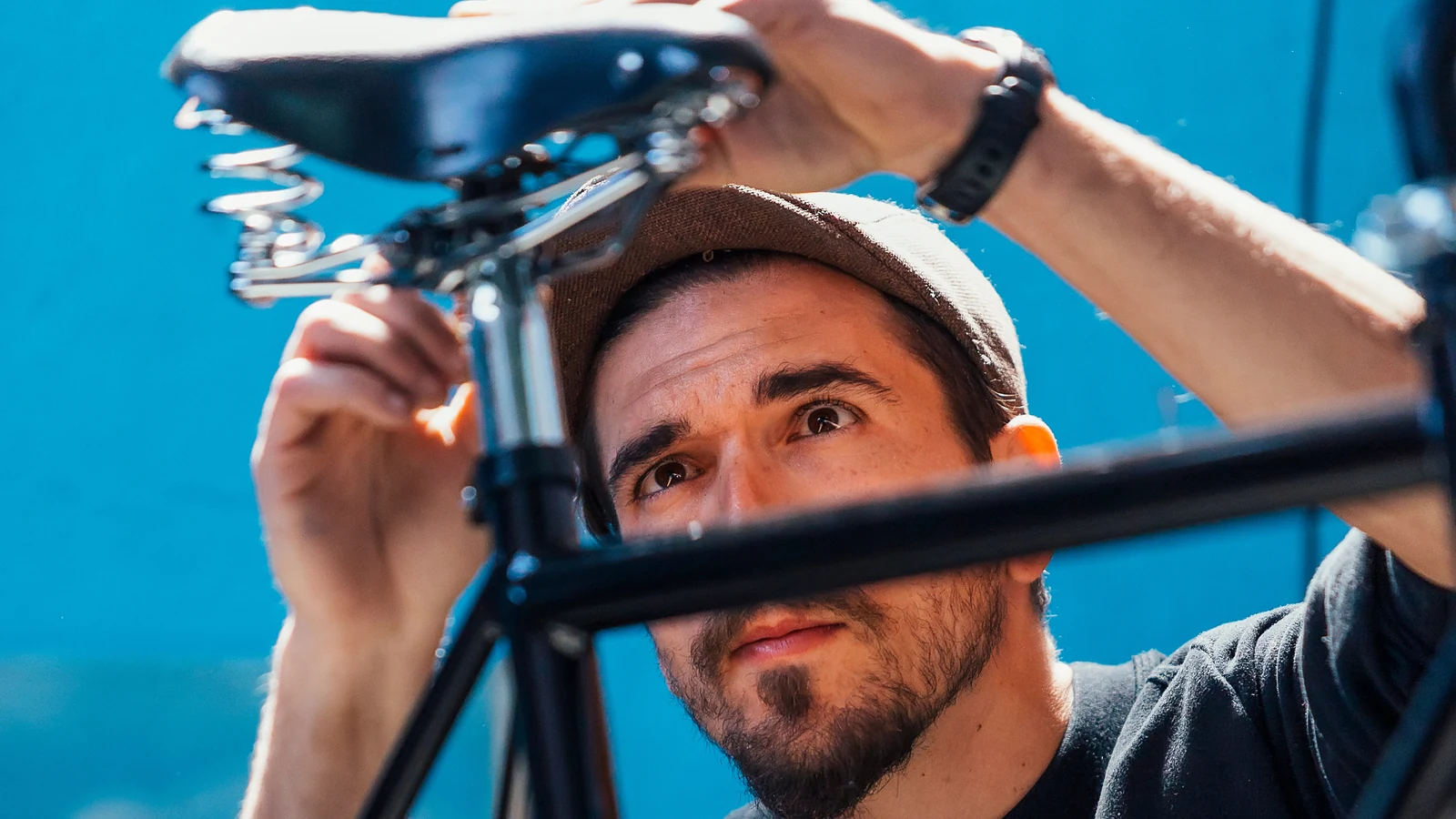
Proper bicycle fit is essential for comfort, safety, injury prevention, and peak performance. The goal is to balance all of the issues at hand, optimize power and aerobic efficiency, and avoid injury. At an average of 80 revolutions per minute, a cyclist may complete over 5400 revolutions during an hour ride, up to 30,000 revolutions over a 100-mile course, and 81,000 revolutions in the span of 1 week.
Complaints related to the lower extremity may be addressed by adjusting the seat height higher or lower; likewise, complaints related to the upper extremities, neck, and back may be addressed by adjusting the handlebars focusing on posture length.
Knee pain is the most common complaints when taking care of cyclists. Localizing where the knee hurts is sometimes all that is needed for correction is a small bicycle adjustment. Anterior knee pain may be due to a seat position too low or too far forward in addition to excessive climbing, use of big gears, or too long a crank arm. Adjusting saddle position and modifying training can improve conditions such as patellar tendinosis and patellofemoral pain. Posterior knee pain may occur if the seat is too high or too far back. Seat adjustment as well as limiting any pedal float can eliminate the discomfort. Medial knee pain can develop from outward pointing toes and/or excessive float in the pedals and can be addressed by changing cleat position and limiting float. Lateral knee pain and iliotibial band symptoms may be seen with toes pointing in and/or excessive float in the pedals. Appropriate cleat and pedal modifications can eliminate lateral pain.
Wrist pain is another common injury in avid cyclers. Ulnar neuropathy or cyclist’s palsy results from excessive pressure on the handlebars. Contributing factors may be bars positioned too low or a saddle too far forward or tilted downward. Hand symptoms may be rectified by increasing handlebar padding, changing hand position frequently, adjusting handlebar tilt and/or height, and rechecking the seat height.
Saddle sores (skin wounds secondary to bacteria, moisture, pressure, and friction), perineal pain and numbness, or impotence, also known as peroneal neuropathy, may result if the saddle is not wide enough to support the ischial tuberosities or set to a correct height and angle. Saddle tilt should be close to level or parallel to the ground. About 60% of body weight can be centered on the narrow saddle.
Undergraduate: Louisiana State University
Medical School: Medical University of the Americas
Residency: Louisiana State University, Shreveport, LA
Fellowship: Sports Medicine Fellow, University of Alabama, Tuscaloosa, AL
Board Certified: American Board of Family Medicine Primary Care Sports Medicine, Primary Care Sports Medicine
Member: American Medical Society for Sports Medicine
For more information or to schedule an appointment with Dr. Garcia call 985-262-1639.